Author: christian@masterchannel.ai

  • Behind the Beats: How Matoma, Armin van Buuren, and Teddy Swims Created “Easy To Love”

    Behind the Beats: How Matoma, Armin van Buuren, and Teddy Swims Created “Easy To Love”

    When you combine maybe ‘the‘ trance legend Armin van Buuren, a world-famous powerhouse vocalist like Teddy Swims (boasting nearly 45 million monthly Spotify listeners), and Norway’s own melodic mastermind Matoma, you get more than just a collaboration, you get a global hit, which they showcased two years ago.

    Released in 2024, their track “Easy To Love” has already surpassed 60 million streams on Spotify. But for the producers and musicians watching from the sidelines, the burning question remains: How did they produce it? And how can I do the same?

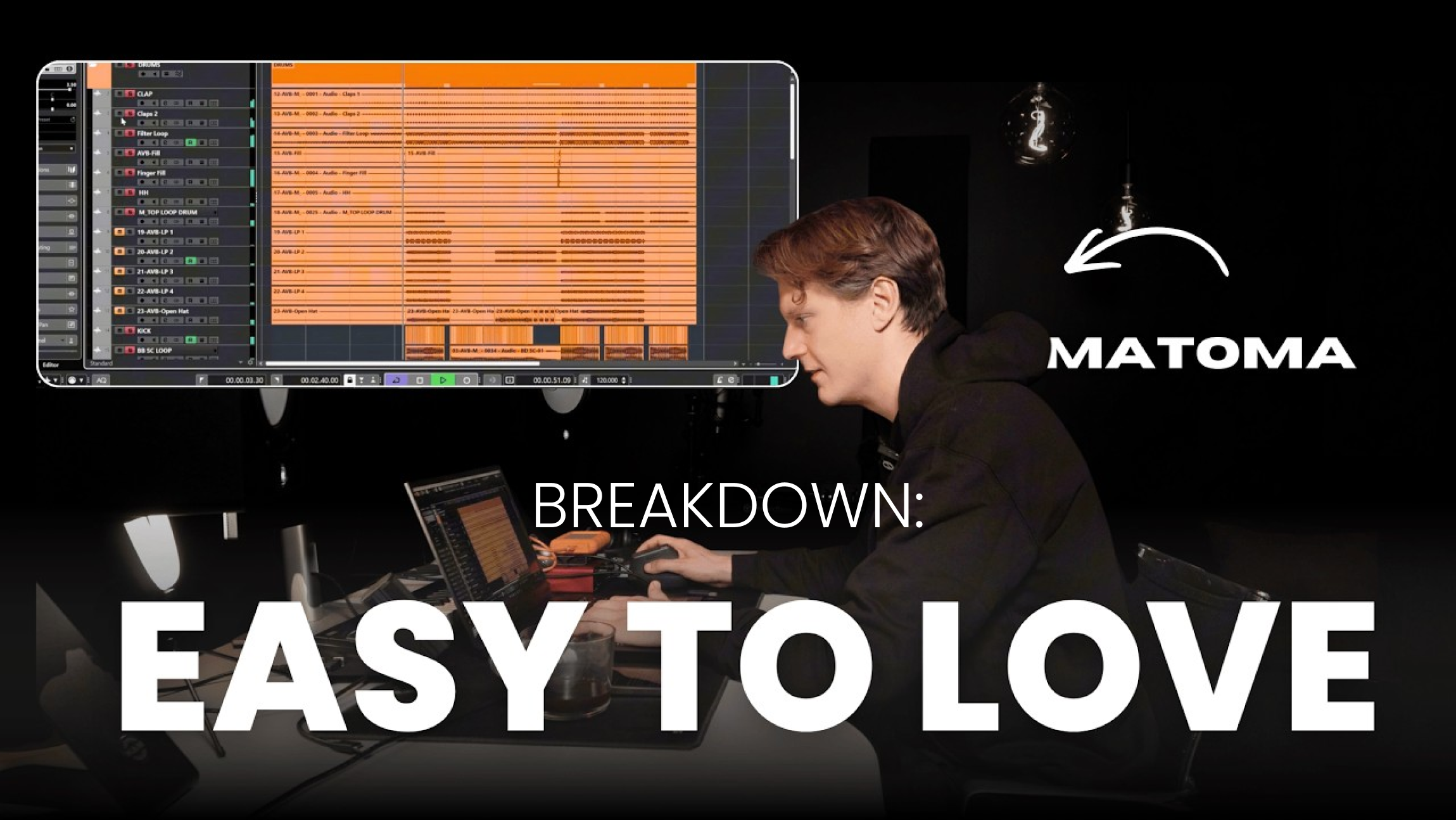
    Tom Stræte Lagergren, better known as Matoma, is pulling back the curtain on how the song came alive. In an exclusive breakdown, the Norwegian producer dives deep into the stems and the creative process that brought this star-studded track to life alongside Armin and Teddy.

    Beyond his hits, Matoma is also a co-founder of Masterchannel, the leading AI-mastering service designed to give bedroom producers the same polished, professional sound as the industry’s biggest stars.

    Watch the full “Easy To Love” production breakdown below:


    Ready to take your own production to the next level? You don’t need a million-dollar studio to sound like a pro. Masterchannel offers world-class AI mastering used by artists globally to ensure their tracks are radio-ready with just one click.

  • The DAWs Powering the 2026 Grammy Nominees and Winners

    Every year, the music industry gathers for the Grammys to celebrate the best in sound, but for all us producers, what we want to know is: “What software did they use?”

    If you’re looking for a single “magic” DAW that guarantees a golden gramophone, you won’t find it. Instead, you’ll find a sophisticated ecosystem where different tools serve different parts of the creative journey. Here is the breakdown of how the world’s top artists are building their award-winning records.

    The “DNA” of a hit is usually born in more creative-friendly environments.

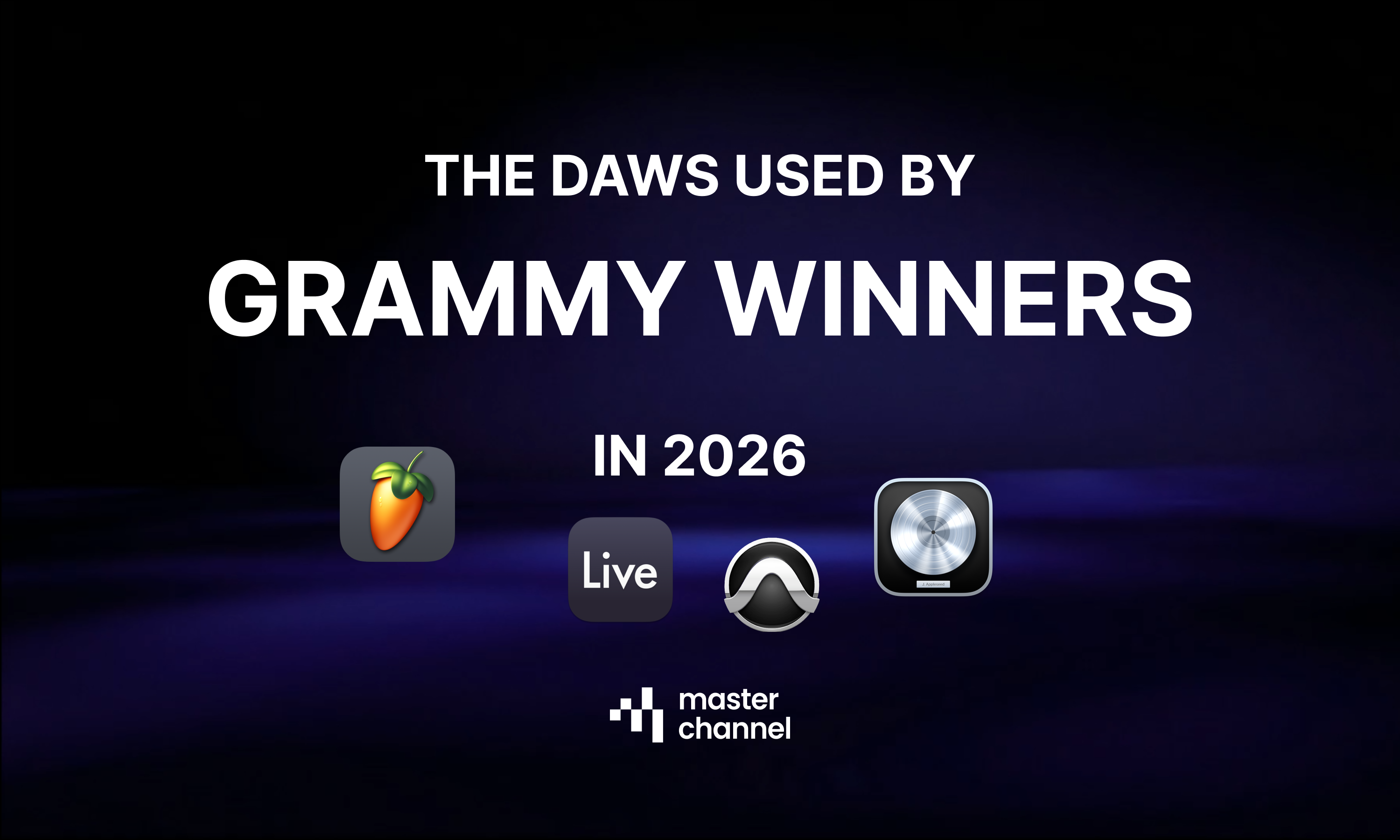
    • Logic Pro (The Songwriter’s Choice): Favored by powerhouses like Finneas and Pharrell, Logic Pro is the “all-in-one” workhorse. Its vast library of virtual instruments allows artists to go from a blank screen to a full arrangement in hours.

    • Ableton Live (The Sound Designer’s Playground): For nominees in the Dance and Alternative categories, Ableton is the weapon of choice. Its ability to warp audio and manipulate samples in real-time makes it a favorite for “vibe” heavy producers like Fred again.. or Skrillex.

    • FL Studio (The Hitmaker’s Secret): Don’t let its “loop-based” reputation fool you. FL Studio is the engine behind some of the biggest Hip-Hop and Pop records on the charts. Its lightning-fast drum sequencing has made it the primary home for producers like Metro Boomin, Avicii and more.

    The most interesting trend among 2026 nominees isn’t the use of one DAW, but the hybrid workflow. Modern hits are digital nomads. A track might start as a drum loop in FL Studio, have synths added in Ableton, record vocals in Logic, and finally be “delivered” to a professional mixer to be polished in Pro Tools or potentially Masterchannel.

    The Takeaway: The Grammy isn’t in the software; it’s in the workflow. The pros use the tool that removes the most friction between their idea and the speakers.

    If you want to…Try this DAW
    Compose and write pop songsLogic Pro
    Produce Electronic or experimental musicAbleton Live
    Make fast Hip-Hop or Trap beatsFL Studio
    Engineer, mix, and master like a proPro Tools or Masterchannel (Mastering)

    No matter which Digital Audio Workstation you choose, there’s one critical final step that separates a great mix from a truly commercial-ready track: mastering.

    This is where Masterchannel steps in. As the leading solution for AI-powered mastering, Masterchannel offers an intelligent, intuitive, and professional-grade mastering experience. Masterchannel bridges the gap between your creative vision and a commercially viable product, ensuring your music sounds its absolute best, ready to compete with Grammy-winning tracks.

  • The Producer’s Final Mile: A Checklist for Pro Results

    The difference between an amateur demo and a commercial release isn’t usually the gear, it’s the discipline of the workflow. Before you call a track “done,” there are technical benchmarks that must be met to ensure your music survives the journey to streaming platforms:

    • Headroom Management: Avoid “clipping” your master fader. Aim for $-6dB$ of peak headroom so there is space for the mastering process to work its magic.

    • Stereo vs. Mono: Check your mix in mono. If your lead synths or wide guitars disappear, you have phase cancellation issues that will ruin the song on club systems or phone speakers.

    • Frequency Balance: Ensure your kick and bass aren’t fighting for the same 30Hz – 100Hz space. Use sidechaining to let the kick punch through.

    You’ve done the hard work of writing, mixing, and troubleshooting. The “Final Mile” is where Masterchannel takes over. Instead of struggling with a complex chain of limiters and imagers on your master bus, you can upload your mix to Masterchannel and get an objective, world-class result in seconds. It acts as a final quality control, fixing minor frequency imbalances and ensuring your track meets the rigorous loudness standards of Spotify, Apple Music, and Tidal.

  • The Vocal Architect: Sculpting Clarity and Presence

    In almost every genre, the vocal is the most important element, but it’s also a frequency hog. To get a vocal to sit perfectly, you have to be gentle with your EQ. Professional vocal mixing involves targeting specific “problem zones” that occur in almost every recording:

    • The Mud Zone (200Hz – 500Hz): Cutting here removes that “boxy” sound that makes a vocal feel like it was recorded in a closet.

    • The Nasal Zone (1kHz – 2kHz): A small dip here can make a harsh voice sound smoother and more expensive.

    • The Air Zone (10kHz+): A subtle high-shelf boost provides that “expensive” shimmer found on professional pop records.

    A common frustration is having a vocal sound great in the mix, only to have it get “buried” once the track is mastered. Masterchannel is built to prioritize vocal presence. Our engine analyzes the mid-range clarity of your track, ensuring that the “space” you carved out for your lyrics remains intact. The result is a master where the vocals feel “expensive” and sit right at the front of the stage, regardless of the playback system.

  • Precision Dynamics: A Guide to Transparent Compression

    Compression is the “invisible hand” of music production. At its core, it’s about reducing the dynamic range, the distance between the quietest and loudest parts of a sound, to create a consistent, powerful energy.

    Whether you’re working on a drum bus or a lead vocal, understanding the four pillars of compression is vital:

    • The Threshold & Ratio: These determine when the compressor “kicks in” and how aggressively it reduces the volume. A 2:1 ratio is gentle for glue, while 10:1 starts moving into limiting territory.

    • Attack & Release: This is where the “groove” is born. A slow attack lets the initial “thwack” of a snare drum through, while the release determines how quickly the volume returns to normal, affecting the “pump” of the track.

    Many home producers “over-compress” their master fader because they are chasing loudness, which often results in a flat, lifeless mix. To avoid this, keep your mix dynamics clean and let Masterchannel handle the final polish. Our automated mastering service uses sophisticated algorithms to apply transparent limiting and multiband compression. It gives you that competitive “radio volume” while preserving the punch and “snap” of your original transients.

  • Beyond the Loop: Using Harmonic Theory to Write Better Songs

    Every producer eventually hits a wall where their beats sound “fine,” but they don’t feel “emotional.” The secret usually lies in the harmonic movement.

    By leveraging classic and popular chord progressions, like the soul-stirring I – VI – III – VII or the ubiquitous I – V – vi – IV—you tap into a mathematical language that listeners have responded to for decades. These sequences aren’t “cheating”; they are the structural beams of songwriting.

    To take your production to the next level, focus on “voice leading.” Instead of jumping your chords up and down the keyboard, keep the notes close together to create a smooth, sophisticated flow. Use your minor chords (like the $ii$ and $vi$) to create tension, and your major chords (the I, IV and V) to provide the payoff.

    When you’ve spent hours perfecting the harmonic balance of a lush synth pad or a piano arrangement, the last thing you want is a mastering process that squashes the life out of those frequencies. Masterchannel’s automated mastering service is designed to recognize these harmonic structures. It ensures that your low-mid warmth stays rich without getting muddy, allowing your chord progressions to breathe and resonate with the professional weight of a studio-engineered track.

  • Mastering the PluggnB Sound

    If you’ve been scrolling through SoundCloud or TikTok lately, you’ve likely encountered that distinct, ethereal sound that feels like a dream sequence in a digital world. That’s PluggnB for you.

    A seamless fusion of the gritty, rhythmic foundations of Plugg and the smooth, soul-stirring melodies of R&B, PluggnB is more than just a genre. It’s an atmosphere.

    It’s defined by “floating” melodies, jazzy chords, and vocals with a lot of reverb on it.

    But how do you take a raw track and give it that professional, polished “glow”? Here is the guide on how to master the PluggnB vibe.

    In PluggnB, the 808 is the heartbeat. It needs to be punchy and present, but there’s a catch: it can’t be messy. Because the genre relies so heavily on lush, delicate melodies, a distorted or “muddy” low end will swallow the very atmosphere you’re trying to create.

    • The Goal: Hard-hitting drums that provide a foundation without suffocating the beauty of your track.

    In many genres, the goal is to make the vocals sit “on top” of the beat. In PluggnB, the rules change. The vocals, usually tuned to perfection and layered with effects, need to sit “in” the beat. That’s the trick.

    You want the listener to feel like the voice is another instrument in the synth stack. Achieving this requires a delicate balance of frequency carving and spatial effects so the artist and the production become one single, cohesive unit. Kind of weird, but also cool.

    The secret sauce of any top-tier PluggnB track is the high-end shimmer. This is what creates that “dreamlike” state. Using professional mastering tools like Masterchannel can help you achieve this effortlessly. It ensures your high frequencies have that signature “glow” while keeping your transient drums grounded and crisp.

  • Blending genres? This is how to make sure they sound good together.

    In the modern streaming era, “genre” has evolved from a strict set of rules into a loose suggestion. We are living in an age of fearless experimentation, where Hyperpop collides with Heavy Metal and Lo-fi textures meet Latin Trap beats. And that’s kind of cool!

    But while creativity knows no bounds, physics does. The biggest hurdle for any genre-blending artist isn’t the songwriting, it’s the sonics. When you pull elements from two different worlds, how do you make them occupy the same space without sounding like a cluttered, messy collage?

    The secret to a successful hybrid track is consistency. When you have a delicate acoustic guitar sitting next to a distorted industrial synth, they can feel like they belong to two different songs.

    Strategic use of compression and limiting acts as the “glue.” By evening out the dynamic range across these disparate elements, you force them to react to one another, creating a unified wall of sound rather than a series of disconnected layers.

    Different genres prioritize different parts of the frequency spectrum. A Punk track lives in the “screeching” mids, while EDM is all about the sub-bass.

    If your track attempts to do both, you run the risk of a mix that is either too thin or painfully harsh. Achieving a professional balance requires a master that understands how to respect the weight of the low end without sacrificing the clarity of the mid-range energy.

    Standard mastering presets often fail hybrid tracks because they try to force a “Country-Techno” song into a “Pop” or “Dance” template. It’s a “square peg, round hole” situation.

    This is where Masterchannel changes the game. Instead of using rigid templates, our AI analyzes the unique DNA of your specific track. It recognizes the hybrid nature of your production and builds a custom profile that:

    • Glues clashing elements together.
    • Balances extreme frequency shifts.
    • Polishes the final output into a cohesive, professional sound.

  • Mastering Modern Rock

    From the top of the global charts to the depths of the underground scene, the pendulum is swinging back. Distorted guitars and live drums are making a massive comeback, bringing a sense of organic grit back to our playlists.

    However, if you’re used to producing electronic music, mastering a Rock track can feel like trying to break a wild horse. It’s a completely different beast. The goal isn’t just “loudness”, it’s power!

    You need that heavy impact without sacrificing the “air” and natural dynamics that make live instruments feel human.

    In a heavy mix, it’s easy for the drums to get swallowed by a “wall of sound.” If you over-compress, your snare drum, the heartbeat of Rock, loses its snap and gets buried under the guitars.

    • The Key: Maintaining the “peak” of your drum hits so they punch through the wall, ensuring the listener feels the drummer’s performance rather than just hearing a flat hum.

    The mid-range is the most crowded neighborhood in a Rock song. It’s where the vocals, the rhythm guitars, and the lead solos all live. If handled poorly, this area becomes a “muddy” mess that fatigues the listener’s ears.

    A great Rock master carves out enough space for the guitars to be punchy and aggressive while leaving a clear pocket for the vocals to cut through.

    Rock music is harmonically dense. Overdriven guitars produce complex overtones that can confuse standard digital limiters, leading to unpleasant distortion.

    Masterchannel’s mastering engine is designed to understand this harmonic complexity. Our AI recognizes the difference between “good” guitar saturation and “bad” master clipping.

    The result? Your tracks achieve the competitive loudness of a modern radio hit while keeping the raw, unbridled energy of the original performance intact.

  • Mastering the Afrofuturist Aesthetic

    Afrofuturism isn’t just a visual movement; it’s a sonic revolution. From the chart-topping textures of Burna Boy and Tems to the boundary-pushing experimentalism of Flying Lotus, this genre is defined by a beautiful contradiction: the marriage of ancient tradition and the distant future.

    Musically, this translates to a mix of organic, earthy percussion layered with high-gloss, neon synth textures. It’s a sound that is both grounded in the soil and reaching for the stars.

    Here is how you master the sound of the future.

    At the heart of Afrofuturism lies the polyrhythm. Unlike the straight-forward 4/4 kicks of many Western genres, these tracks rely on intricate, dancing percussion layers.

    In the mastering stage, clarity is non-negotiable. You cannot allow the bass to “eat” the transients of the woodblocks, shakers, or talking drums. Every rhythmic element needs to be crisp and distinct, allowing that essential groove to move the listener’s body.

    Afrofuturist tracks are rarely “small.” They often utilize deep, wide reverbs and advanced spatial effects to create a sense of vastness, like music echoing through a high-tech cathedral or across a desert on another planet.

    • The Challenge: Keeping those wide soundscapes from becoming a “wash.”
    • The Goal: Ensuring the spatial elements feel immersive and “expensive” without losing the center-image focus of the lead vocal and kick drum.

    When you are blending experimental textures with traditional sounds, the “finish” of the track is what bridges the gap. You want the organic elements to feel high-definition and the synths to feel warm, not sterile.

    Masterchannel provides that elusive studio-grade finish. Our engine respects the intricate rhythmic layers of your production while ensuring the overall track sounds club-ready and polished. We help preserve the luster of your experimental sounds, making sure your vision sounds like a million-dollar production.

Exit mobile version